The Modern Mine: Leveraging Telematics for Operator Excellence and Safety
In the rugged world of mining, where colossal machinery operates in challenging environments, the human element remains the most critical factor for success. A single misstep can lead to costly downtime, equipment damage, or, most tragically, injury. For decades, mining companies have grappled with the complex challenges of training and assessing heavy equipment operators, relying on a mix of on-the-job experience and subjective evaluations. This case study explores how one of our mining company customers overcame these hurdles by implementing the Precisol-Automation CAN Data Logger, a telematics solution that transformed their approach to operator development and safety.
The Challenge: A Foundation of Risk and Inefficiency
One of our mining company customers, like many in its industry, faced a series of persistent problems. The training of new operators was a prolonged, resource-intensive process. Trainees would learn the ropes by shadowing experienced operators, a method that was inconsistent and prone to inheriting bad habits. The assessment of operator skill was equally subjective, often based on a supervisor's visual observation of a limited number of maneuvers. This meant that critical issues like excessive idling, harsh braking, or inefficient route planning went unnoticed, quietly eroding productivity and increasing wear and tear on million-dollar machines.
The company's reliance on traditional methods created a hidden layer of risk. Without quantifiable data on operator behavior, one of our mining company customers had no way to identify unsafe practices before they led to an incident. They couldn't pinpoint who was speeding, who was operating a machine with excessive strain, or who was failing to perform pre-shift inspections. This lack of visibility not only jeopardized safety but also made it impossible to implement targeted, data-driven training programs. The company knew it needed a change—a way to move from gut-feeling management to an objective, data-centric approach.
The Solution: Embracing Data with the Precisol-Automation CAN Data Logger
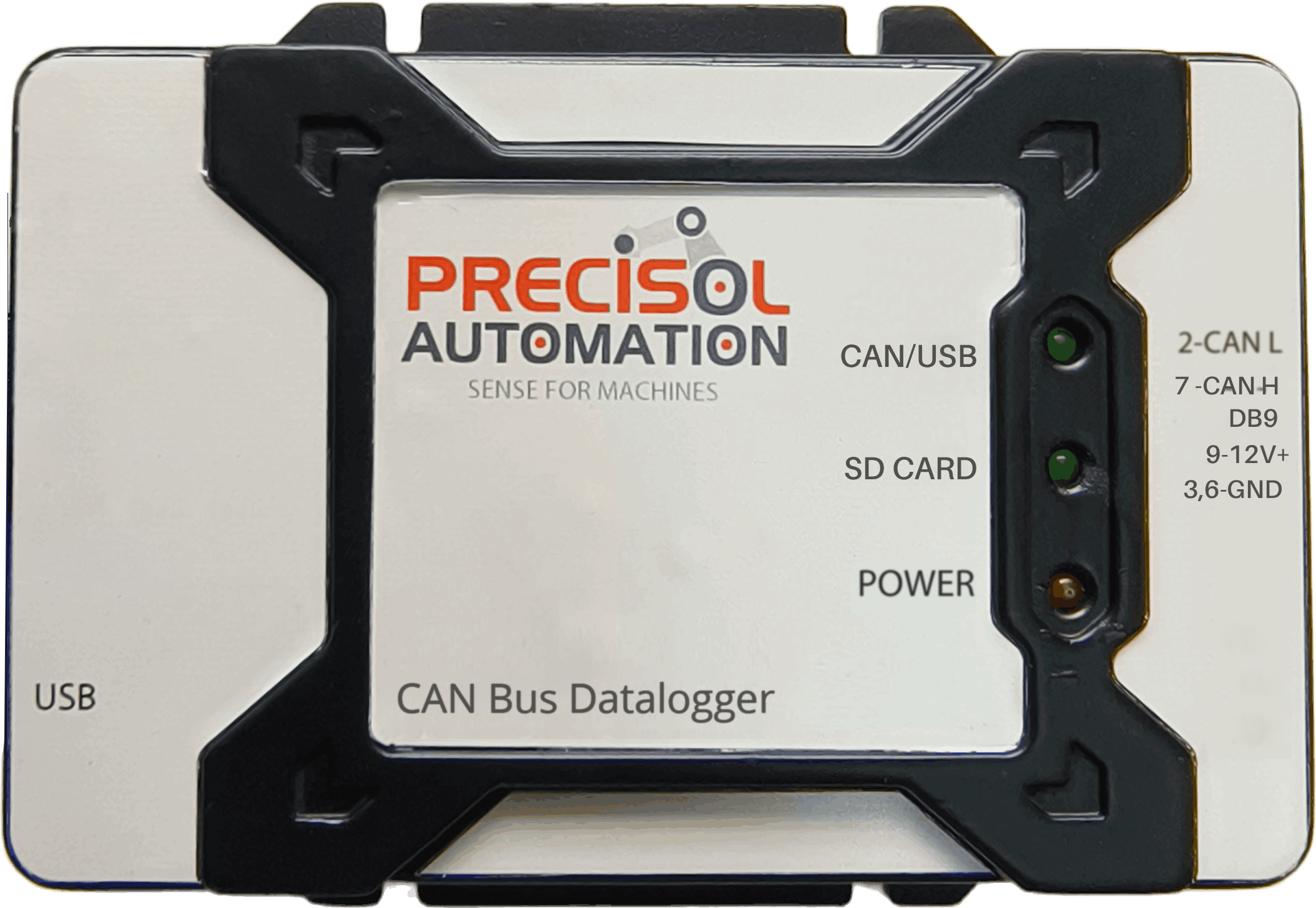
After a comprehensive review of available technologies, one of our mining company customers chose the Precisol-Automation CAN Data Logger. The device, which connects directly to the vehicle's Controller Area Network (CAN) bus, offered a simple, robust, and cost-effective solution. The CAN bus is the nervous system of modern heavy equipment, transmitting thousands of data points every second—from engine RPM and fuel consumption to brake pressure, hydraulic temperatures, and even geo-location via GNSS. The Precisol-Automation logger was designed to capture this torrent of data offline, storing it securely on an internal SD card for later analysis using the PreciCon tool.
The implementation was surprisingly straightforward. A simple four-wire connection was all that was needed to link it to the machine's CAN bus. This ease of installation meant that the entire fleet could be equipped with the loggers quickly and without significant downtime. Once installed, the loggers began capturing a wealth of previously unavailable data, laying the groundwork for a new era of operator training and assessment.

The Transformation: A Data-Driven Approach to Training and Safety
The data collected by the Precisol-Automation CAN Data Logger was the key to one of our mining company customers' transformations. The company's management and training supervisors now had access to objective, irrefutable evidence of operator performance.
- Objective Operator Assessment and Personalized Training: By analyzing the logged data, our customers could create a detailed driver score for each operator. This score was based on quantifiable metrics like:
- Idle Time: Data showed which operators were letting machines idle for extended periods, a major drain on fuel and an unnecessary source of emissions.
- Harsh Braking and Acceleration: The logger captured instances of aggressive driving, which accelerates wear and tear on tires and brakes.
- Fuel Consumption: By correlating fuel burn with operational metrics, the company could identify and coach operators who were less fuel-efficient.
- Optimal Machine Use: The data revealed if operators were using the correct gear for the task, or if they were consistently pushing the engine into an inefficient RPM range.
- Proactive Safety Management: Beyond training, the data logger became a cornerstone of the customer's safety program. The system flagged behaviors that indicated risk, such as repeated over-speeding in designated zones or operating machinery at dangerous angles. This allowed the safety team to intervene with an operator before an accident occurred, rather than investigating one after the fact. The historical data also provided a clear record of compliance with safety protocols, protecting the company from liability and fostering a culture of accountability among the workforce.
- Predictive Maintenance Insights: An unexpected but valuable benefit was the application of the CAN data for predictive maintenance. By logging CAN fault codes, the company's maintenance team could see early warning signs of mechanical issues. For example, a consistent increase in a hydraulic fluid temperature could signal a failing pump, allowing a proactive repair to be scheduled. This shifted the maintenance strategy from reactive, costly repairs after a breakdown to planned, efficient service, drastically reducing unexpected downtime.
This data allowed supervisors to move from generic training to personalized coaching. Instead of telling an operator to be more efficient, they could show them a specific graph detailing their excessive braking events and provide targeted instruction. This data-driven feedback loop made training more effective and engaging, leading to a faster skill development curve for new hires and continuous improvement for veterans.
The Results: Tangible ROI and a Culture of Excellence
Within the first year of implementation, one of our mining company customers saw a remarkable return on its investment. Fuel costs dropped by 12% as operators, armed with data and targeted coaching, reduced unnecessary idling. Maintenance expenses were lowered by 15% due to proactive repairs and less wear and tear on equipment. Most importantly, the company experienced a 30% reduction in safety-related incidents, creating a safer work environment and boosting employee morale.
The Precisol-Automation CAN Data Logger wasn't just a piece of hardware; it was a catalyst for cultural change. It empowered trainers with objective tools, equipped operators with actionable feedback, and provided management with the visibility needed to make informed decisions. This customer's journey from subjective, reactive management to a data-driven, proactive model stands as a powerful testament to the transformative power of modern telematics in the mining industry.