GDP Temperature Data Logging: Pharmaceutical Cold Chain Compliance with IoT
29 September 2026
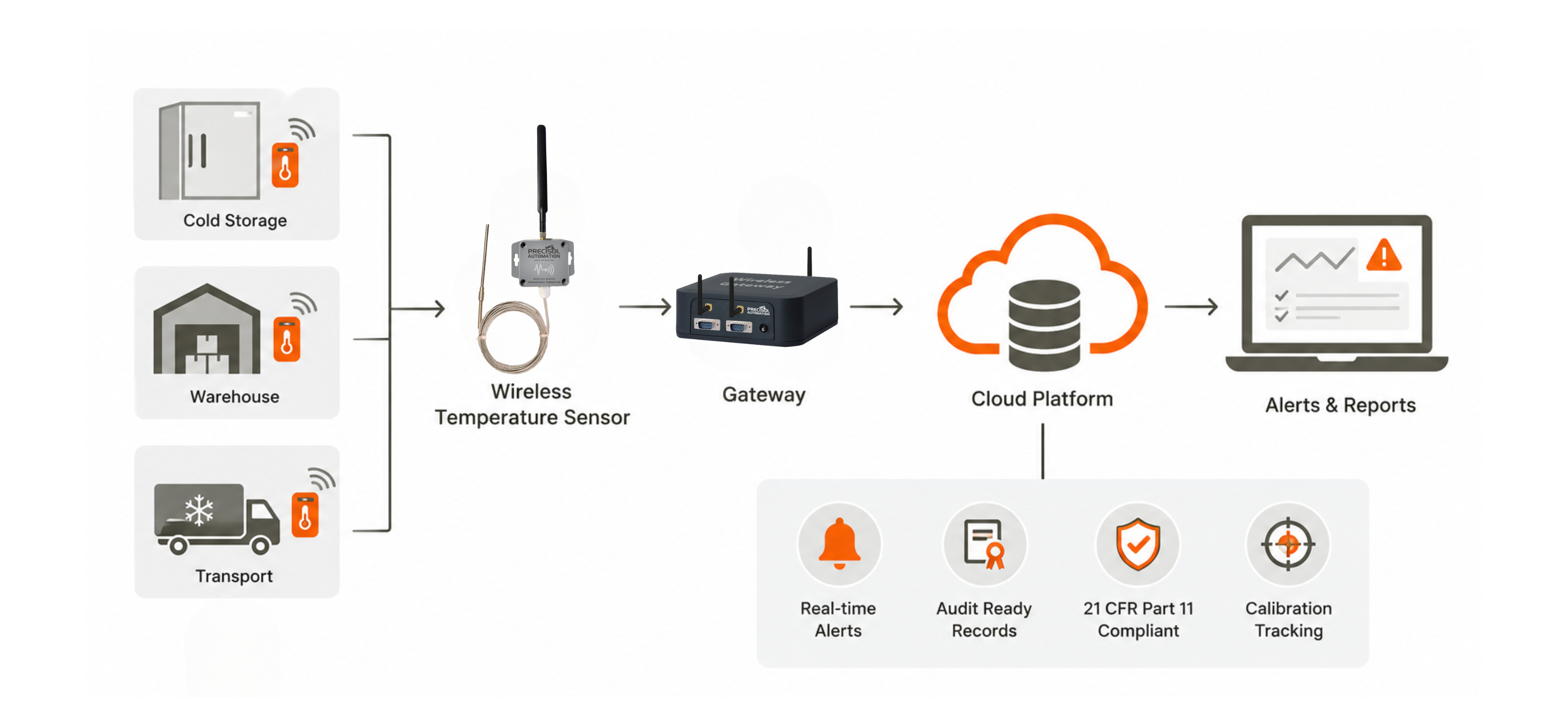
GDP temperature data logging is a non-negotiable regulatory requirement for every pharmaceutical distributor, wholesaler, cold store operator, and logistics provider handling temperature-sensitive medicines — and IoT wireless sensors are transforming how that requirement is met, replacing manual paper logs and after-the-fact USB logger downloads with real-time, cloud-connected pharmaceutical cold chain monitoring that alerts on excursions while they are still occurring and generates audit-ready compliance records automatically. GDP temperature data logging requirements flow from WHO GDP guidelines (WHO TRS 957 Annex 5), EU GDP guidelines (2013/C 343/01), and regional drug regulatory authorities (CDSCO in India, MHRA in UK, FDA 21 CFR Parts 211 and 211 in USA) — all of which require systematic temperature monitoring, written procedures, qualified storage areas, and documented records demonstrating product storage within specified ranges throughout the supply chain. The consequences of GDP non-compliance are severe: regulatory inspections that find inadequate temperature data logger pharma records result in GDP certificate suspension, product recalls, and in worst cases, unsafe medicines reaching patients with compromised potency from cold chain breaks. Cold chain compliance IoT systems that connect pharmaceutical cold chain monitoring sensors to cloud platforms with real-time alerting and 21 CFR Part 11 compliant records close the compliance gap that manual temperature logs have always presented — data gaps during night shifts, illegible handwriting, and records that are discovered missing only during a regulatory inspection.
GDP Temperature Data Logging: What the Guidelines Require
- Temperature Mapping (Qualification): Before using any storage area for GDP temperature data logging, the space must be temperature-mapped under extremes of ambient conditions to identify hot and cold spots. Pharmaceutical cold chain monitoring sensor placement is then based on the mapping worst-case locations — ensuring that GDP monitoring points represent the most challenging temperature conditions in the storage area, not just convenient locations.
- Continuous Temperature Recording: WHO GDP guidelines require continuous temperature data logging — not periodic spot checks. Temperature data logger pharma devices or IoT sensors must record at intervals no greater than 10–15 minutes (typically 2–5 minute intervals for cold chain monitoring), capturing the complete temperature profile including any excursions that occur between readings.
- Alarm Limits (Alert and Action): GDP temperature data logging systems must be configured with two temperature limit sets: alert limits (warn before the product specification is breached, allowing corrective action before actual excursion) and action limits (the actual storage specification limit — breach requires immediate investigation and batch quarantine pending quality assessment). Cold chain compliance IoT platforms manage these two-tier alarm systems with mandatory alarm acknowledgement and corrective action recording.
- Calibration Traceability: All temperature data logger pharma sensors used for GDP temperature data logging must be calibrated against NIST-traceable standards at defined intervals (typically annually), with calibration certificates retained as part of the GDP quality records system. Pharmaceutical cold chain monitoring IoT platforms that track sensor calibration due dates and link certificates to sensor records simplify this compliance requirement significantly.
GDP Temperature Data Logging: Storage Zone Reference
| Product Type | Storage Range | GDP Temperature Data Logging Requirement |
|---|---|---|
| Refrigerated Pharmaceuticals | 2–8°C | Continuous pharmaceutical cold chain monitoring; alert at <2°C or >8°C |
| Ambient / Controlled Room Temperature | 15–25°C (or 15–30°C per SmPC) | Temperature data logger pharma recording; annual mapping requalification |
| Frozen Biologicals / Gene Therapy | -20°C or -70°C to -80°C (ultra-cold) | Cold chain compliance IoT with redundant sensor and UPS-protected logging |
| Vaccines (WHO EPI) | +2°C to +8°C | GDP temperature data logging with Fridge Tag or equivalent WHO-prequalified logger |
| Transport / Last-Mile | As product specification | Pharmaceutical cold chain monitoring via shipment-level data logger or active tracker |
Deploy GDP Temperature Data Logging IoT with Precisol Automation
Precisol Automation's Wireless Temperature Sensor provides the battery-powered, calibration-traceable sensing nodes for GDP temperature data logging in pharmaceutical cold rooms, warehouses, and distribution centres — with NIST-traceable calibration and ±0.3°C accuracy suitable for pharmaceutical cold chain monitoring. The Wireless Humidity Sensor adds humidity monitoring for ambient storage areas where RH affects product stability. The PreciCloud platform provides cold chain compliance IoT reporting with 21 CFR Part 11 audit trails, alarm management, and calibration record tracking.
See wireless temperature monitoring for cold chain compliance in our warehouse temperature monitoring case study, or explore vaccine storage monitoring as a specific temperature data logger pharma implementation for WHO GDP guideline compliant cold chain management.
Frequently Asked Questions
What is GDP temperature data logging and why is it required?
GDP temperature data logging is the continuous electronic recording of temperature conditions throughout pharmaceutical storage and distribution — required by WHO GDP guidelines, EU GDP guidelines, and regional regulators (CDSCO, FDA, MHRA). Temperature data logger pharma devices must record at ≤15 minute intervals with NIST-traceable calibration. GDP pharmaceutical cold chain monitoring records must be retained and available for regulatory inspection — gaps or manual log inaccuracies can lead to GDP certificate suspension and product recalls.
What is pharmaceutical cold chain monitoring and which products require it?
Pharmaceutical cold chain monitoring is systematic continuous temperature tracking from manufacturer to patient for temperature-sensitive products including vaccines (2–8°C), biologicals, insulin, monoclonal antibodies, blood products, and gene therapies (-70°C or below). GDP temperature data logging must cover all storage facilities and all transportation steps — cold chain compliance IoT systems provide real-time visibility and alerting across the entire supply chain, replacing after-the-fact temperature data logger pharma downloads with live monitoring.
How does cold chain compliance IoT differ from traditional temperature data loggers?
Traditional temperature data logger pharma devices record locally and download after the fact — missing the intervention window during transit excursions. Cold chain compliance IoT adds real-time cellular transmission, triggering immediate alerts when temperature exceeds action limits during storage or transport. GDP temperature data logging via IoT enables real-time intervention — rerouting shipments, dispatching cooling — before irreversible product damage. Pharmaceutical cold chain monitoring IoT also provides remote warehouse monitoring without site visits, with automated daily compliance reports.