Building Energy Management System (BEMS) with IoT: Smart Building Energy Savings
02 October 2026
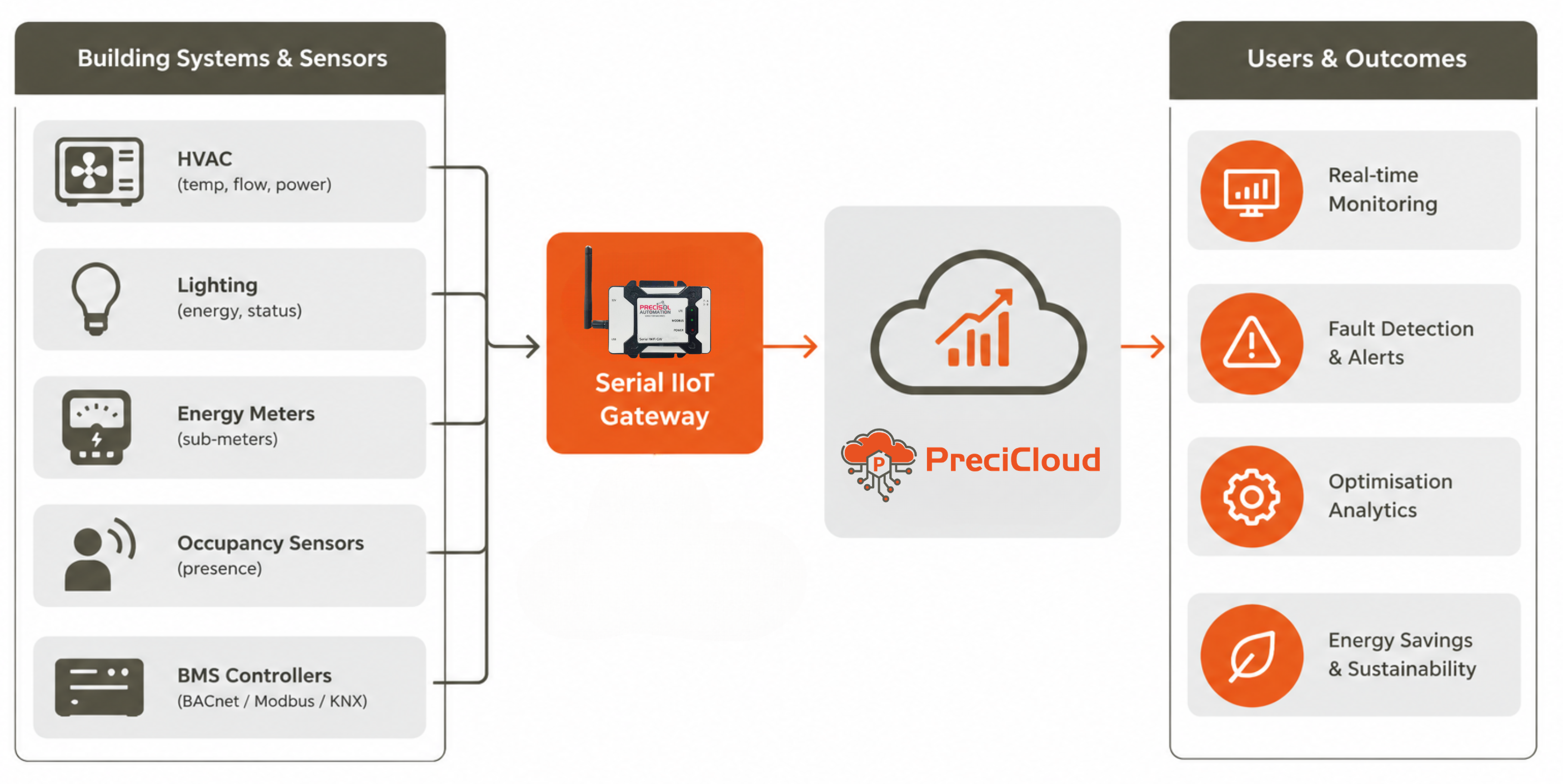
A building energy management system IoT (BEMS IoT) transforms the way commercial buildings, hospitals, university campuses, and industrial facilities manage their energy consumption — moving from reactive billing response to proactive, data-driven energy optimisation that consistently delivers 15–30% energy cost reduction. Buildings represent approximately 40% of global energy consumption, and HVAC alone accounts for 40–60% of a typical commercial building's electricity use — making smart building energy monitoring with IoT one of the highest-impact sustainability and cost reduction initiatives available to facility and energy managers. Traditional Building Management Systems (BMS) provide local automation control, but their analytics capabilities are limited, their data is trapped in proprietary local systems inaccessible to energy managers remotely, and they rarely integrate with utility billing, occupancy schedules, or weather data to enable truly intelligent energy optimisation. BEMS IoT integration solves this by adding a cloud analytics and connectivity layer above the existing BMS — collecting data from BMS controllers via BACnet, Modbus, and KNX, supplemented by IoT sub-meters, wireless temperature sensors, and occupancy detectors that fill the building data gaps the BMS leaves. The building energy management system IoT cloud platform provides energy managers with the real-time visibility, fault detection, and optimisation analytics to identify and eliminate the specific waste streams — unoccupied zone HVAC, lighting left on overnight, chiller overcooling, and peak demand spikes — that their annual electricity bills have reflected without any actionable data to address them. Energy management BMS IoT integration is also the enabling technology for LEED Energy Performance tracking, NABERS energy star rating, BEE Star Rating compliance, and ISO 50001 energy management system certification — delivering compliance evidence alongside the cost reduction.
What BEMS IoT Integration Monitors and Controls
- HVAC Sub-System Monitoring: The primary focus of any building energy management system IoT — AHU supply and return air temperatures, chilled water supply and return temperatures, chiller compressor energy, cooling tower energy, AHU fan power, and zone temperature versus setpoint comparison. Smart building energy monitoring identifies HVAC faults (AHU supply temperature too high, chilled water delta-T degraded, zone temperature hunting) that indicate wasted energy before they appear in the monthly utility bill.
- Lighting and Plug Load Sub-Metering: BEMS IoT integration adds circuit-level energy sub-meters for lighting panels and floor distribution boards — identifying which zones and floors are the highest lighting energy consumers, tracking outside-hours energy for equipment left on, and validating energy savings after LED retrofits. Building automation IoT occupancy sensor integration enables automatic lighting and HVAC shutoff in unoccupied zones — a straightforward saving that manual scheduling cannot deliver reliably across a large building.
- Energy Use Intensity (EUI) Benchmarking: The building energy management system IoT platform calculates EUI (kWh/m² per year) for the whole building and by sub-system — enabling comparison against sector benchmarks, peer buildings, and the building's own historical performance. EUI trending identifies when the building is consuming above its baseline (detecting new equipment, occupancy increase, or system degradation) and quantifies improvement after energy projects.
- Demand Management and Peak Shaving: Energy management BMS IoT integration with real-time power demand data enables automated load shedding during peak tariff periods — temporarily raising cooling setpoints, reducing lighting levels, and deferring non-critical loads during demand charge windows. Smart building energy monitoring demand data identifies which loads contribute most to peak demand for targeting demand reduction investments.
BEMS IoT Integration: Energy Savings by Measure
| Energy Saving Measure | BEMS IoT Integration Data Required | Typical Saving (% Building Energy) |
|---|---|---|
| HVAC Scheduling Optimisation | Zone occupancy, AHU run-time from building automation IoT | 5–10% of total HVAC energy |
| Chiller Optimisation (delta-T, COP) | Smart building energy monitoring chilled water temperatures and chiller kW | 3–8% of chiller energy |
| Outside-Hours Energy Elimination | Building energy management system IoT — sub-meter data by zone and time | 5–15% of total building energy |
| Peak Demand Reduction | Energy management BMS — real-time kW demand by panel | 10–25% reduction in peak kVA demand charge |
| Fault Detection and Diagnostics | BEMS IoT integration — equipment performance versus baseline comparison | 5–15% through elimination of simultaneous heating and cooling etc. |
Deploy Building Energy Management System IoT with Precisol Automation
Precisol Automation's Serial IIoT Gateway provides BEMS IoT integration for Modbus RTU/TCP connected BMS controllers, energy meters, and HVAC equipment — enabling building energy management system IoT data collection from both legacy and modern building automation systems. The PreciCloud IoT Cloud Dashboard provides the smart building energy monitoring and energy management BMS analytics platform with zone-level energy dashboards, EUI reporting, and HVAC optimisation analysis.
See IoT-enabled energy monitoring delivering measurable savings in our IT-OT bridge for process automation case study, or explore how Precisol enables smart energy metering as the sub-metering foundation for BEMS IoT integration in multi-zone commercial building energy programmes.
Frequently Asked Questions
What is a building energy management system IoT and how does it work?
A building energy management system IoT (BEMS IoT) connects building systems — HVAC, lighting, power, renewables — to a cloud analytics platform via BEMS IoT integration with BMS controllers (BACnet, Modbus, KNX) and supplementary IoT sub-meters and sensors. Smart building energy monitoring analytics identify waste, optimise HVAC scheduling, benchmark Energy Use Intensity, and enable fault detection — delivering building automation IoT control optimisation and energy manager workflows from a single cloud dashboard.
What energy savings can BEMS IoT integration deliver in commercial buildings?
BEMS IoT integration delivers 15–30% energy savings through HVAC scheduling optimisation (5–10% HVAC saving), chiller optimisation (3–8%), outside-hours energy elimination via building automation IoT occupancy detection (5–15%), and peak demand shaving (10–25% demand charge reduction). Smart building energy monitoring identifies simultaneous heating and cooling, unoccupied zone energy waste, and equipment performance degradation — the building energy management system IoT makes these specific rather than estimates.
How does BEMS IoT integration differ from a traditional Building Management System (BMS)?
Traditional BMS provides local automation with limited analytics and proprietary data access. BEMS IoT integration adds cloud connectivity (remote access without VPN), advanced analytics (fault detection, EUI benchmarking, carbon reporting), multi-site energy comparison, and integration with utility billing, occupancy calendars, and weather forecasts. Energy management BMS IoT sits above the existing BMS — adding intelligence to proven control infrastructure rather than replacing it.