Fleet Telematics: Using CAN Bus Data to Transform Fleet Management
11 August 2026
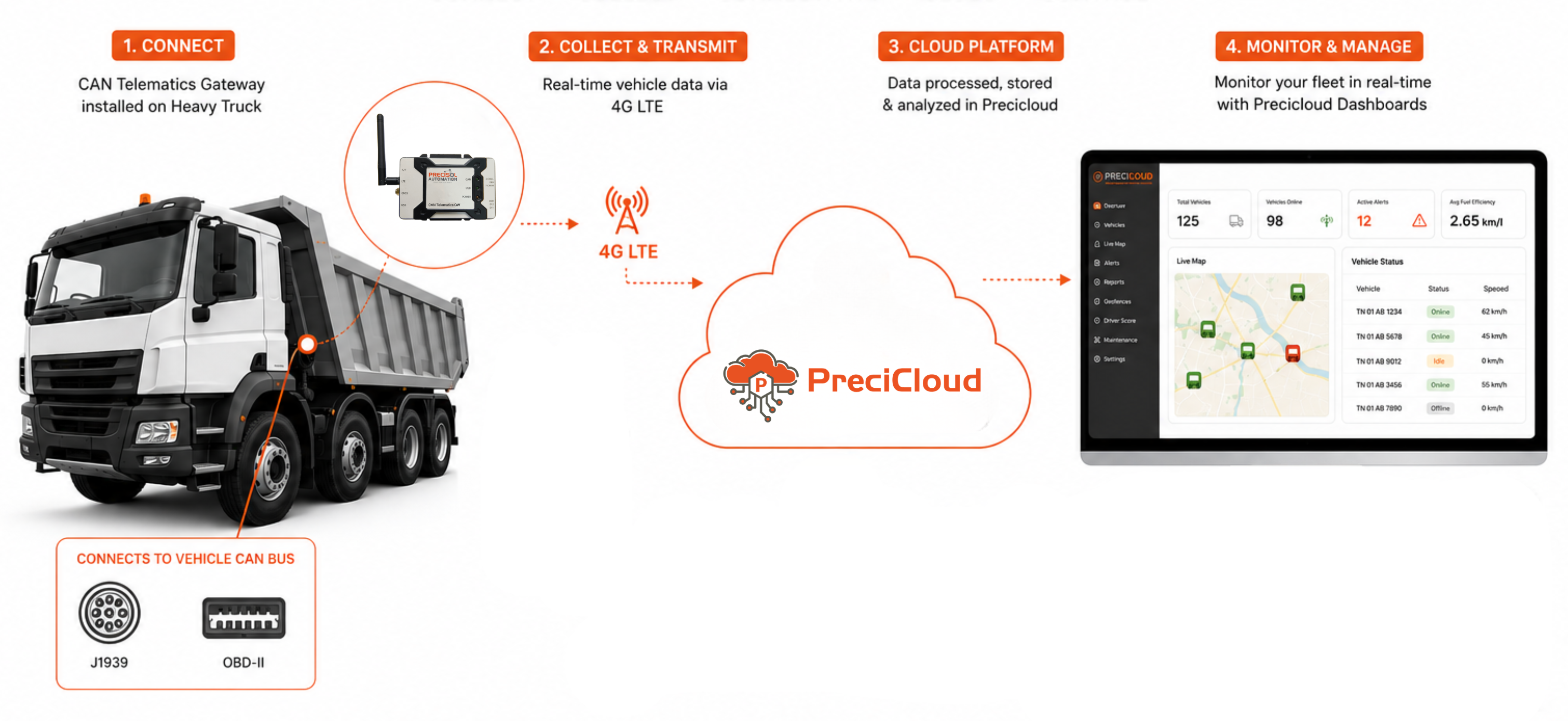
Fleet telematics powered by CAN bus data has transformed commercial fleet management from a reactive, paper-based discipline into a proactive, data-driven operation. A modern fleet telematics system connects a CAN bus gateway to the vehicle's J1939 or OBD-II network, reads live engine parameters — RPM, fuel consumption, coolant temperature, fault codes — and transmits this data alongside GPS position via cellular to a cloud fleet management platform. CAN bus fleet management gives fleet operators complete, real-time visibility of every vehicle's location, health, driver behaviour, and fuel efficiency — enabling decisions that reduce operating costs, improve safety, and extend vehicle life. The vehicle telematics system closes the information gap between the truck cab and the fleet manager's desk, replacing phone calls and paper defect forms with live fleet data analytics and automated alerts.
What CAN Bus Fleet Management Data Reveals
The CAN bus carries a continuous stream of real-time vehicle data that a fleet telematics gateway captures and transmits to the cloud. For J1939-equipped heavy commercial vehicles, CAN bus fleet management provides access to dozens of standardised SPNs (Suspect Parameter Numbers). Key parameters the vehicle telematics system extracts:
- Engine and Fuel Data: Engine RPM, fuel consumption rate, total fuel used, engine load percentage, and idle fuel consumption — the foundation of fleet data analytics for fuel efficiency improvement and idle time reduction.
- Driver Behaviour Signals: Accelerator pedal position, harsh braking events (detected via vehicle speed rate-of-change on the CAN bus), harsh acceleration, and over-speed events — all derivable from CAN bus fleet management data without any additional sensors.
- Fault Codes (DTCs): Active and stored J1939 DTCs transmitted by the engine ECU, transmission controller, and other vehicle modules — allowing the fleet telematics platform to alert fleet managers to developing mechanical issues before breakdown.
- Equipment Status: PTO engagement, refrigeration unit status (for refrigerated transport), tailgate lift operation, and payload indication — operational data that CAN bus fleet management captures without driver input.
Fleet Telematics ROI: Where the Savings Come From
| Cost Category | Fleet Telematics Mechanism | Typical Saving |
|---|---|---|
| Fuel | GPS fleet tracking reveals idling, routing, driver behaviour | 10–20% fuel cost reduction |
| Maintenance | CAN bus fleet management fault alerts enable proactive repair | 15–25% reduction in repair costs |
| Downtime | Vehicle telematics system DTC alerts prevent roadside breakdown | 30–50% reduction in unplanned stoppages |
| Insurance | Fleet data analytics driver scoring supports insurer discounts | 5–15% insurance premium reduction |
| Compliance | GPS fleet tracking tachograph and driver hours data | Avoid regulatory fines |
GPS Fleet Tracking and Fleet Data Analytics
While CAN bus data provides the mechanical intelligence, GPS fleet tracking provides the spatial context. A complete fleet telematics platform combines both: the vehicle's precise location and route history from GPS, and the engine state and driver behaviour from CAN bus fleet management data. This combination enables powerful fleet data analytics: correlating fuel consumption with specific routes to identify inefficient paths; mapping harsh braking events to road junctions to identify driver training opportunities; and building vehicle utilisation reports that show exactly which assets are underused and when. GPS fleet tracking geofence alerts — notifications when a vehicle enters or leaves a defined zone — add an additional layer of operational intelligence for duty cycle management and unauthorised use detection.
Deploy CAN Bus Fleet Telematics with Precisol Automation
Precisol Automation's CAN Telematics Gateway connects to vehicle J1939 and OBD-II CAN buses to extract live engine data, transmitting it via 4G LTE to cloud fleet telematics platforms. The CAN Telematics Logger provides local data logging capability for CAN bus fleet management applications where cellular connectivity is intermittent — storing fleet data analytics data locally and uploading when connectivity is restored.
See CAN bus fleet telematics transforming heavy truck operations in our heavy truck fleet management case study, or explore how Precisol enables fleet management of haul trucks with complete vehicle telematics system integration.
Frequently Asked Questions
What is fleet telematics and how does it work?
Fleet telematics connects a CAN bus gateway to vehicle J1939 or OBD-II networks, transmitting live engine data and GPS position via cellular to a cloud platform. CAN bus fleet management provides real-time visibility of fuel consumption, fault codes, driver behaviour, and location — turning raw vehicle telematics system data into actionable fleet data analytics for cost reduction and safety improvement.
What CAN bus data does a fleet telematics system collect?
CAN bus fleet management systems collect engine RPM, fuel consumption, coolant temperature, oil pressure, odometer, idle time, DTCs, driver inputs (accelerator, brake), and equipment status (PTO, payload). Fleet data analytics platforms process this vehicle telematics system data into driver scoring, maintenance alerts, and efficiency reports via GPS fleet tracking correlation.
How does fleet telematics reduce operating costs?
Fleet telematics reduces costs via fuel savings (10–20% from GPS fleet tracking of idle time and routing), maintenance cost reduction (CAN bus fleet management fault alerts enable proactive repair), downtime reduction (vehicle telematics system DTC alerts prevent breakdown), and insurance savings (fleet data analytics driver scoring supports safer behaviour).