Industrial Data Logging – Why It Matters in Automation Systems
20 June 2026
Industrial Data Logging: The Core Technology Transforming Automation
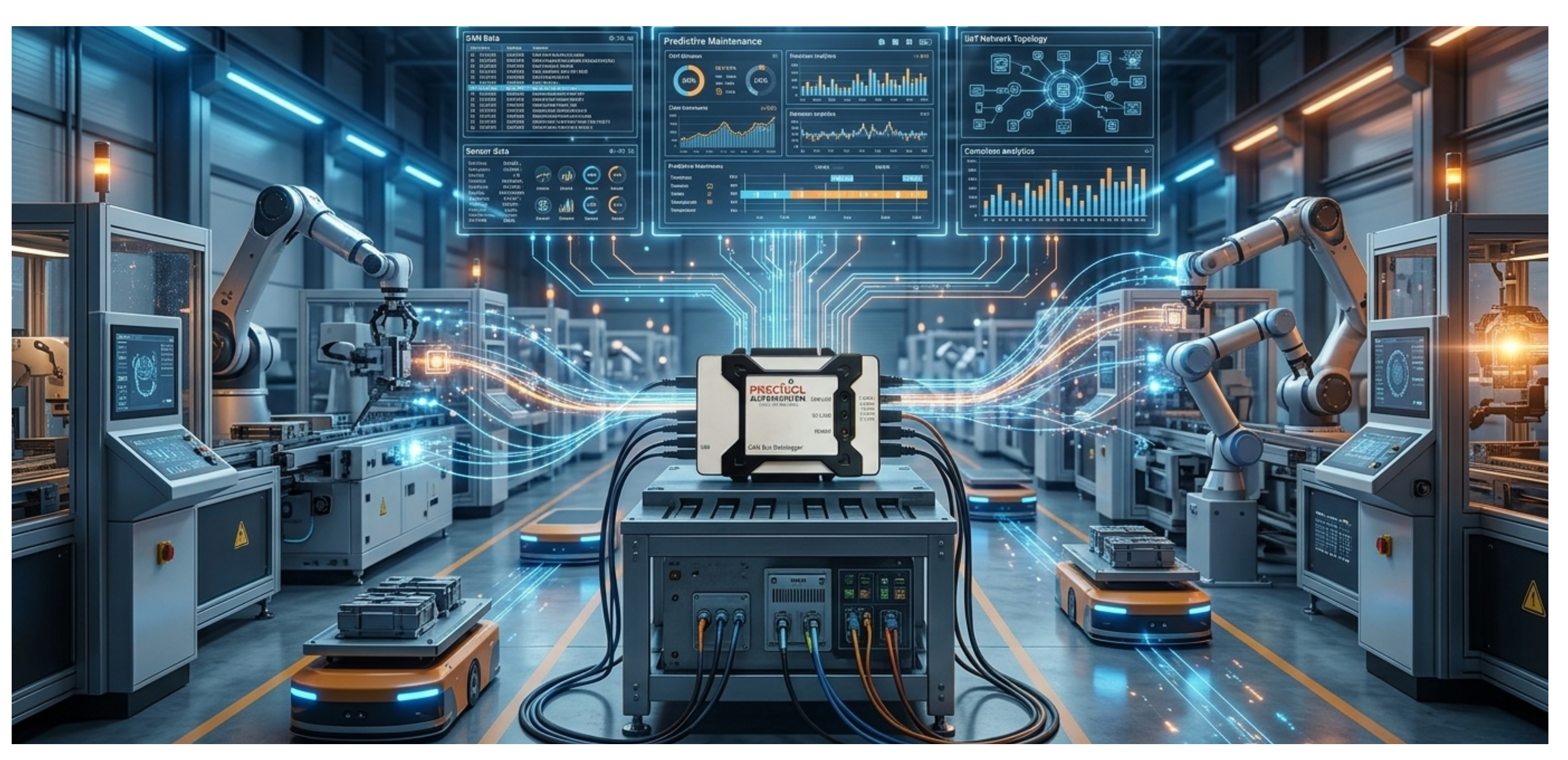
In the fast-paced world of industrial automation, we are often captivated by the most visible components of a smart factory. We marvel at high-speed robotic arms assembling complex machinery, autonomous guided vehicles (AGVs) navigating warehouse floors, and sleek Human-Machine Interfaces (HMIs) displaying vibrant, real-time control graphics. However, beneath the surface of these high-tech operations lies a quiet, invisible stream of reality: data. Millions of data packets are generated every second by sensors, Electronic Control Units (ECUs), and actuators. Without a systematic way to capture, store, and interpret this stream, an industrial plant is essentially operating in the dark.
This is where industrial data logging steps into the spotlight. Far from being a simple, passive recording exercise, industrial data logging is the bedrock of modern industrial automation, predictive maintenance, and operational excellence.
The Evolution of the Digital Witness
Historically, data logging in industrial plants was a tedious, manual process. Operators walked the factory floor with clipboards, noting down temperature readings, pressure gauges, and machine hours at scheduled intervals. This method was not only prone to human error but also completely inadequate for catching transient faults or micro-stoppages.
Today’s industrial data loggers are high-speed, intelligent devices designed to interface directly with industrial communication networks. In automotive, aerospace, heavy machinery, and manufacturing environments, machines communicate using specialized protocols like the Controller Area Network (CAN bus).
An advanced industrial data logger acts as an unblinking digital witness. It intercepts raw data frames directly from the communication bus, timestamps them with microsecond precision, and archives them securely. This capability transforms raw, chaotic electrical signals into a structured narrative of a machine’s life cycle.
Why Data Logging Matters: The Core Benefits
Why are global industries investing heavily in dedicated logging infrastructure? The reasons span across the entire lifecycle of industrial assets:
- Root-Cause Diagnostics and TroubleshootingWhen a complex machine fails, the immediate priority is minimizing downtime. However, fixing the symptom without understanding the cause guarantees a repeat performance. A data logger functions exactly like a commercial aircraft’s "black box." By reviewing the logged communication frames leading up to an error or unexpected shutdown, diagnostic engineers can reconstruct the precise sequence of events. They can pinpoint whether a failure was caused by a mechanical failure, a sensor malfunction, or a software glitch within the ECU.
- Transitioning from Reactive to Predictive Maintenance Operating on a reactive maintenance model—fixing things only when they break—is incredibly expensive. Conversely, scheduled maintenance often replaces perfectly good parts prematurely. Industrial data logging unlocks the holy grail of asset management: predictive maintenance. By continuous tracking of parameters such as engine temperatures, fluid pressures, and error codes over time, data analytics software can identify subtle anomalies. A gradual rise in operational temperature or an increase in sporadic CAN bus error frames indicates that a component is failing, allowing engineering teams to plan maintenance before a catastrophic breakdown occurs.
- Field Testing and Product Validation For Research and Development (R&D) teams, especially in the rapidly growing Electric Vehicle (EV) and heavy machinery sectors, real-world data is invaluable. Laboratory simulations can only go so far. This real-time empirical data validates design assumptions and accelerates time-to-market.
- Continuous Process Optimization In automated manufacturing, micro-efficiencies aggregate into massive cost savings. By logging cycle times, power consumption patterns, and throughput metrics, operational managers can identify bottlenecks in production lines. Data logging provides the objective truth needed to fine-tune automation logic, balance workloads across machines, and optimize energy usage.
Protocols and Environments: The Need for Specialized Hardware
Industrial environments are notoriously harsh. Therefore, industrial logging requires specialized hardware that is as robust as it is intelligent.
Furthermore, the data logger must speak the language of the machine. In automotive and heavy machinery applications, protocols like J1939 (used in commercial trucks, buses, agricultural machinery, and construction equipment) and OBD2 (used for passenger cars' on-board diagnostics) are standard. A versatile data logger must be protocol-independent, capable of acquiring raw frames from any CAN-enabled device (such as CANopen or NMEA networks) without altering the behavior of the host system or consuming valuable network bandwidth.
Elevate Your Automation Strategy with Precisol Automation
As industries march aggressively toward Industry 4.0, having the right data-logging infrastructure is no longer optional—it is a core competitive necessity. If you are looking to unlock the hidden insights within your machines, Precisol Automation provides the robust, industry-grade solutions you need.
Precisol Automation specializes in bridges, gateways, and logging devices engineered to survive the toughest operational environments. A prime example of their engineering excellence is the Precisol CAN Datalogger Precisol CAN Datalogger
Key Capabilities of the Precisol CAN Datalogger:
- Stand-Alone, High-Security Performance: This compact, plug-and-play device safely captures raw CAN bus frames (supporting Classical CAN 2.0, ISO 11898-1/2) and stores them securely inside an encrypted, non-removable internal microSD card (expandable from 8GB to 32GB).
- Protocol Independent & Out-of-the-Box Ready: Whether you require a specialized J1939 datalogger for fleet management in commercial trucks, or an OBD2 datalogger to monitor the field performance of a new EV prototype, the device adapts seamlessly. It operates entirely independently of specific protocols.
- Seamless Data Retrieval via PreciCON: Configuring the device and downloading log files is incredibly straightforward. Using Precisol’s free, intuitive Windows tool, PreciCON, engineers can effortlessly load DBC files to configure settings and export captured data into industry-standard .CSV or .MF4 formats for rapid analysis.
- Zero Ongoing Costs: Unlike many telematics solutions that tie you down with recurring subscriptions, Precisol's data logger delivers full fleet monitoring, fault code identification, and performance logging with zero monthly charges.
Empower Your Digital Transformation
Don’t let your automation systems run on guesswork. Whether your objective is to streamline vehicle servicing, protect high-value industrial assets through predictive maintenance, or supercharge your R&D validation pipeline, Precisol Automation has the hardware and expertise to support your journey.
Explore the full technical specifications or book a live product demo by visiting the official Precisol CAN Datalogger today. Let Precisol turn your raw industrial data into actionable operational intelligence.